
THE FEEL GOOD FRAMEWORK™
How we make great education films.
Great films don't start with a camera. They start with understanding.
Our Feel Good Framework™ is the seven-stage film production process behind every project from strategy and creative development through to filming, post-production and delivery.
Built around the realities of working with schools, colleges and universities, it keeps your team involved, your project moving and everyone clear on what happens next.
A clear process. No surprises.
You're part of it from the start.
A great education film involves a lot of moving parts. Our job is to make them feel simple.
From the first conversation to final delivery, you'll always know where the project stands, what's happening next and what we need from you.
Clear when it needs to be. Collaborative where it matters.
Our Framework
The Feel Good FrameworkTM
Great education films don't start with a camera. They start with understanding.
Our Feel Good Framework™ is the process behind every project from getting under the skin of your institution and developing the creative, through to production, post-production and delivery.
You’re part of the journey from the very beginning.
01
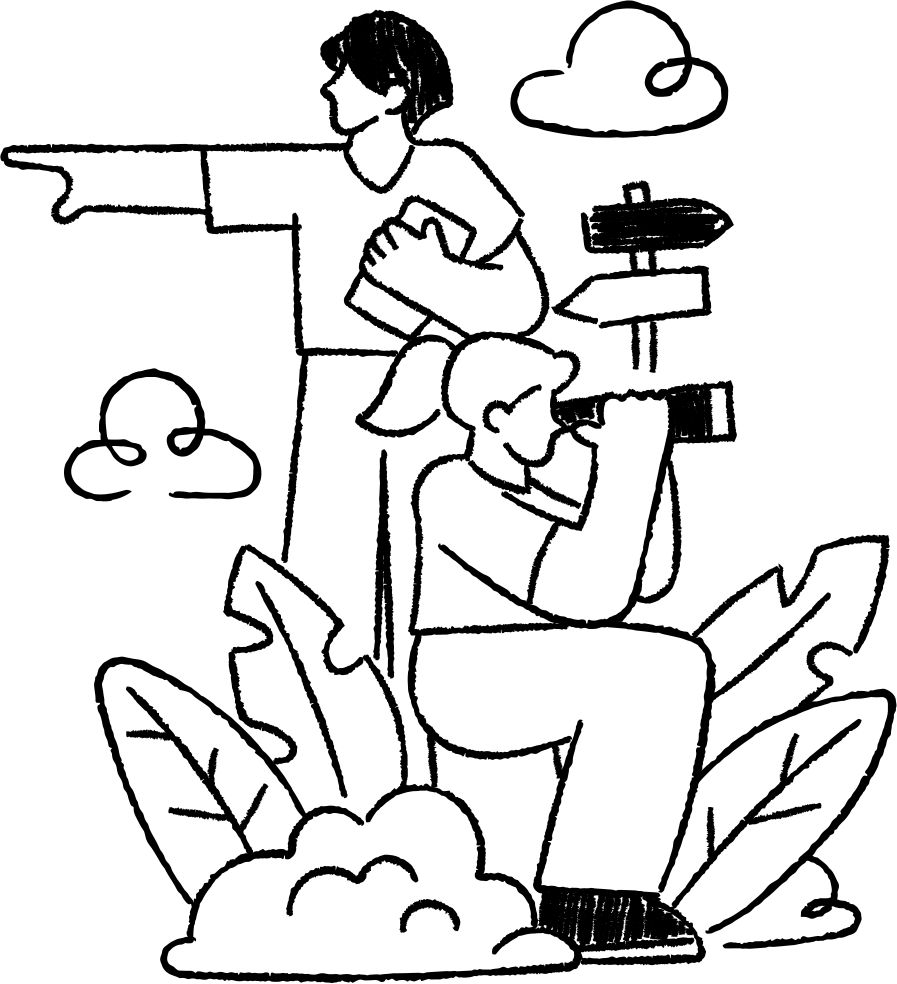
Discover & Strategy
We begin by listening. Through an initial meeting and in-person visit, we get under the skin of your institution meeting your community, understanding your audiences and uncovering what makes you different.
02
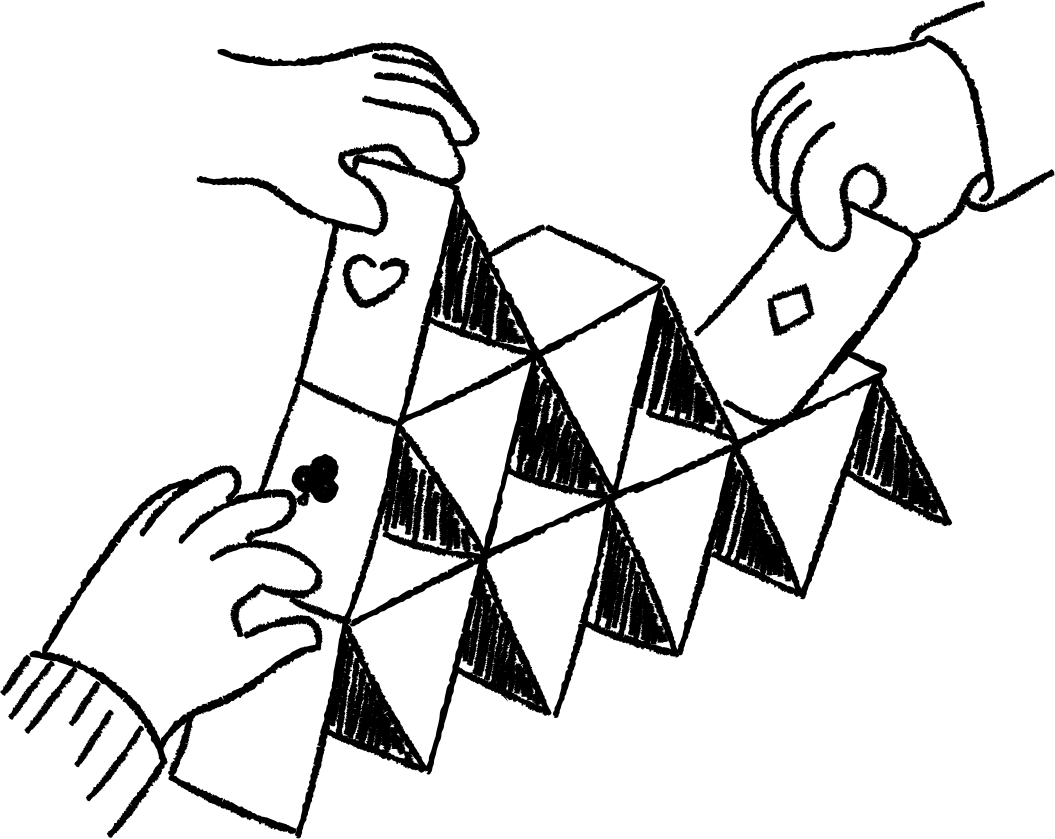
Creative Development
Everything we learn becomes the foundation for the creative. Together, we explore ideas, stories and different creative directions until we find the one that feels unmistakably yours.
03
Creative Presentation
We make the vision tangible. Through Director’s Treatments, sample scripts, visual references and film inspiration, your team can see, hear and feel the creative direction before production begins.
04
Pre-Production
With the creative agreed, we plan every detail. From scripts and storyboards to schedules, locations and safeguarding, everything is carefully prepared around your institution and academic calendar.
05
Production
This is where your story comes to life. Our experienced, DBS-checked crews understand how to work confidently and sensitively within schools, colleges and universities creating a relaxed environment while maintaining the highest safeguarding standards.
06
Post-Production
We shape everything we've captured into a story designed to connect. Editing, sound, colour, graphics and music come together to create a film with emotional impact supported by tailored edits for different audiences and platforms.

07
Delivery & Optimisation
Your film shouldn't live in one place. We prepare and optimise your content for websites, social media, open days, admissions campaigns and digital advertising helping you get more value from everything we've created.
<style>
  .swiper-slide:not(.swiper-slide-duplicate) {
    opacity: 0;
    transform: translateY(16px);
    transition: opacity 0.5s ease, transform 0.5s ease;
  }
  .swiper-slide.is-visible {
    opacity: 1;
    transform: translateY(0);
  }
</style>

<script>
  window.addEventListener('load', () => {
    setTimeout(() => {
      const observer = new IntersectionObserver((entries) => {
        entries.forEach((entry) => {
          if (entry.isIntersecting) {
            const slides = entry.target.querySelectorAll('.swiper-slide:not(.swiper-slide-duplicate)');
            slides.forEach((slide, i) => {
              setTimeout(() => {
                slide.classList.add('is-visible');
              }, i * 150);
            });
            observer.unobserve(entry.target);
          }
        });
      }, { threshold: 0.15 });

      document.querySelectorAll('.slider-component').forEach((component) => {
        observer.observe(component);
      });
    }, 500);
  });
</script>


<script async type="module"
src="https://cdn.jsdelivr.net/npm/@finsweet/attributes@2/attributes.js"
fs-list
></script>
<link rel="stylesheet" href="https://cdn.jsdelivr.net/npm/swiper@8/swiper-bundle.min.css"/>
<script src="https://cdn.jsdelivr.net/npm/swiper@8/swiper-bundle.min.js"></script>
<script>
document.addEventListener("DOMContentLoaded", () => {
  document.querySelectorAll(".slider-component").forEach((component) => {
    const cmsWrap = component.querySelector(".swiper");
    if (!cmsWrap) return;
    const swiper = new Swiper(cmsWrap, {
      loop: true,
      slidesPerView: "auto",
      followFinger: true,
      freeMode: false,
      slideToClickedSlide: false,
      centeredSlides: false,
      autoHeight: false,
      speed: 800,
      slideActiveClass: "is-active",
      slideDuplicateActiveClass: "is-active",
      autoplay: {
        delay: 5000,
        disableOnInteraction: false,
        pauseOnMouseEnter: true,
      },
      mousewheel: {
        forceToAxis: true,
      },
      keyboard: {
        enabled: true,
        onlyInViewport: true,
      },
      navigation: {
        nextEl: component.querySelector(".slider_btn_element.is-next"),
        prevEl: component.querySelector(".slider_btn_element.is-prev"),
      },
      pagination: {
        el: component.querySelector(".slider_bullet_wrap"),
        bulletActiveClass: "is-active",
        bulletClass: "slider_bullet_item",
        bulletElement: "button",
        clickable: true,
      },
      scrollbar: {
        el: component.querySelector(".slider_draggable_wrap"),
        draggable: true,
        dragClass: "slider_draggable_handle",
        snapOnRelease: true,
      },
    });
  });
});
</script>

<script>
  document.addEventListener('DOMContentLoaded', function () {
    // Target your specific dropdown — adjust selector if needed
    const dropdownToggle = document.querySelector('.navbar_dropdown-toggle');
    const megaMenu = document.querySelector('.navbar_dropdown-list');

    if (!dropdownToggle || !megaMenu) return;

    // Watch for Webflow adding/removing the open class
    const observer = new MutationObserver(function () {
      const isOpen = dropdownToggle.classList.contains('w--open');
      const fadeEls = megaMenu.querySelectorAll('.mega-menu-fade');

      if (isOpen) {
  setTimeout(() => {
    fadeEls.forEach((el, i) => {
      el.style.setProperty('--stagger-delay', `${i * 0.08}s`);
      el.classList.add('is-visible');
    });
  }, 30);
} else {
  fadeEls.forEach(el => el.classList.remove('is-visible'));
}
    });

    observer.observe(dropdownToggle, { attributes: true, attributeFilter: ['class'] });
  });
</script>
IN MORE DETAIL
How we craft your films
Pre-production
Pre-Production is the most important stage of any film project. This is where we get to know everything about your organisation to start building our pre-production deck. These decks include video conceptualisation, storyboarding, logistical and operational plans.
Production
Lights, camera, action! It is time to step onto set to capture your organisations video content, utilising our professional video production team and cinema quality equipment.
A few things you might want to know
Yes.
Feel Good Films works with schools, colleges, universities and education organisations across the UK and internationally.
The scale and logistics may change, but our approach remains the same: understand the institution first, find the right story and build the production around the people and environment we're filming.
Yes. We often plan productions so the footage can work beyond one main film.
Depending on your project, that could include shorter edits, vertical video, student or staff stories, campaign content, open-day films and social-first assets.
Planning these requirements before filming allows us to capture the right material and get considerably more value from each production day.
We share edits through Frame.io, allowing your team to watch the film online and leave comments directly against the relevant moment.
This keeps feedback consolidated and makes it much easier for stakeholders to collaborate without long email chains or separate documents.
The number of feedback and revision rounds included will be clearly set out in your proposal before the project begins.
That's completely normal.
Most of the people we film aren't professional presenters, and we don't expect them to be.
Our crews are experienced in helping students, teachers, parents and alumni feel comfortable on camera. Depending on the creative approach, that might mean informal conversation, interview techniques, observational filming or giving someone a little more time to settle in.
Comfortable people make better films.
Absolutely. It's something we're very used to.
Schools are busy environments, and filming needs to work around lessons, break times, assemblies, activities, staff availability and the unexpected things that inevitably happen during a school day.
We build realistic schedules with your team during pre-production and remain flexible on set when things change.
We work closely with each institution to follow its safeguarding policies and requirements.
Before filming, we agree how permissions, contributors, locations and supervision will be managed. On set, our crew works sensitively around students and staff and follows the safeguarding procedures agreed with your team.
Our aim is always to create an environment that is safe, respectful and comfortable for everyone involved.
Crew members working on our education productions are appropriately DBS checked where required.
Our teams are experienced in working within schools and educational environments and understand the responsibilities involved when filming children and young people.
Safeguarding isn't something we bolt onto production. It's considered throughout planning and filming.
Where appropriate, yes and for larger brand film projects, it's an important part of how we work.
Visiting your school, college or university allows us to understand the environment, meet key people, explore locations and identify opportunities that aren't always obvious from a written brief.
It helps us develop a film around the reality of your institution rather than assumptions made from behind a desk.
It depends on the story we're telling.
Some projects can be captured in a single carefully planned filming day, while larger school brand films and campaigns may require several days across different year groups, activities, locations or times of year.
During Discovery & Strategy, we'll recommend the right amount of filming based on your objectives rather than simply adding more production days.
The cost of a school film depends on the creative approach, number of filming days, crew requirements, locations and number of final films or content assets required.
Rather than offering a one-size-fits-all package, we build each proposal around what the project genuinely needs.
If you have a defined budget, we're happy to work with it and recommend where the investment will have the greatest impact.
The timescale depends on the size and complexity of the project, but a typical school film production can take around 4-6 weeks from initial discovery to final delivery.
Larger campaigns, multiple films or projects requiring filming across different terms may take longer.
We'll agree a clear production schedule at the beginning of the project, taking into account your academic calendar, key admissions dates, open days and any campaign deadlines.
Every project follows our Feel Good Framework™: Discover & Strategy, Creative Development, Creative Presentation, Pre-Production, Production, Post-Production and Delivery & Optimisation.
We begin by understanding your school, audience and objectives before developing the creative idea. From there, we manage planning, filming, editing, feedback and final delivery, keeping your team involved throughout the process.
The exact approach is tailored to each school, college or university rather than forcing every project through an identical production model.
Ready when you are
Got a story in mind?
Whether you have a fully formed brief or simply know it's time to do something different, we'd love to hear what you're working towards.
Award-winning filmmaking.
Trusted by schools, colleges and universities in the UK and internationally.


